Whole-House Water Filtration Systems: A Buyer's Guide
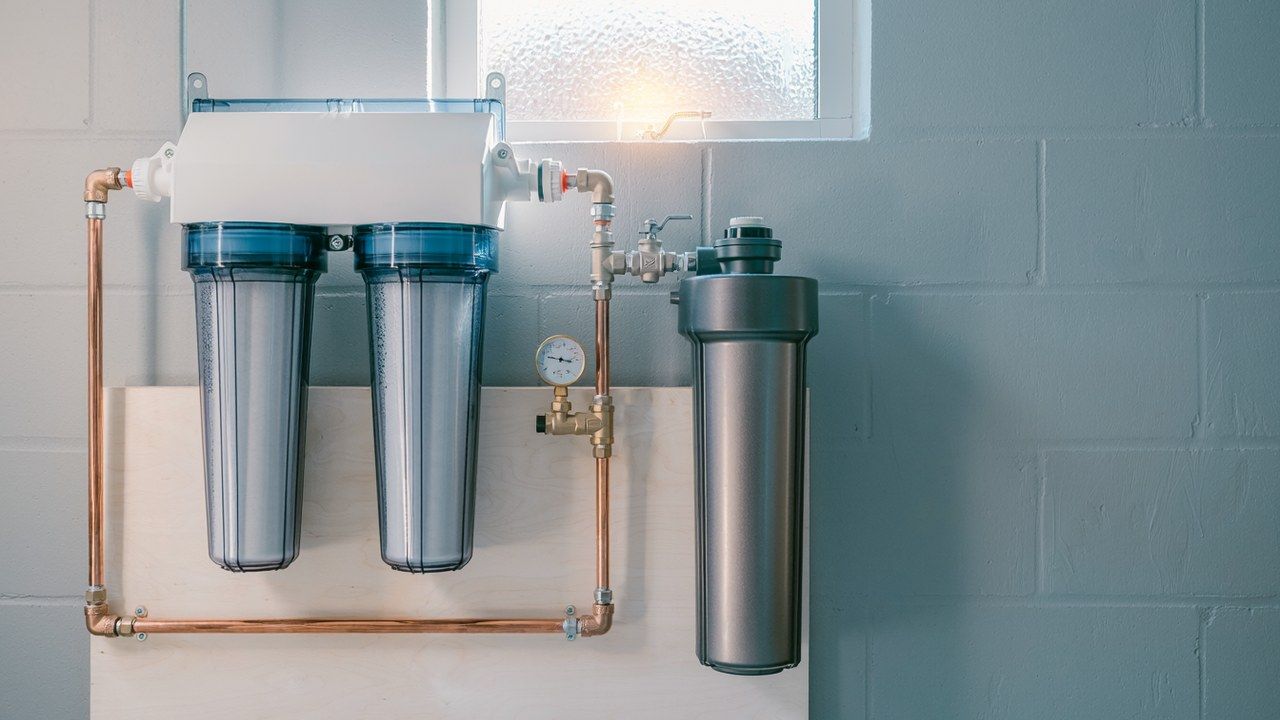
A whole house water filtration system treats every gallon at the point where water enters your home, so every tap, shower, and appliance gets filtered water. The right system depends on what your water carries: sediment, chlorine taste and odor, iron, or sulfur. Test first, then choose the filter media, size, and maintenance plan that match your results.
What a Whole-House Filter Actually Does
A whole-house filter, also called a point-of-entry system, sits on the main water line and cleans water before it branches out to the rest of the house. It is designed to change what is in your water, such as grit, chlorine, or staining metals, rather than the mineral hardness that causes scale.
That distinction matters because filtration and softening are often confused. A softener exchanges calcium and magnesium for sodium, and our Water Softeners 101 guide explains that process in detail. A filter works differently: water passes through a physical or chemical media that traps particles or adsorbs dissolved compounds. If your complaint is a swimming-pool smell in the shower, orange stains in the tub, or cloudy water after a main break, a filter is the tool for the job.
The Centers for Disease Control and Prevention describes whole-home filters as systems that filter water as it comes into the house, so all water from every tap is treated, including the water you bathe and clean with. That whole-home reach is the main reason to choose one over a single under-sink unit.
Start With What Your Water Report Says
Before comparing equipment, read your utility's annual water quality report, because it tells you what the treatment plant is sending to your street. For city customers in the Steubenville area, that report is the cheapest, fastest starting point for a buying decision.
Here is a concrete local example. The City of Steubenville Water Department's 2024 Drinking Water Consumer Confidence Report states that the city draws its water from the Ohio River. It lists a chlorine residual of 1.81 ppm in 2024, with a range of 1.23 to 2.00 ppm, and an average total hardness of 106 in its operational table, with a range of 61 to 136. The same report notes that 29 PFAS compounds and lithium were tested in 2023 under the federal UCMR5 program and none were detected in the finished water.
What does that mean for a buyer? Chlorine at those levels is doing its job keeping water safe in the mains, but its taste and smell are also why many city households consider whole-house carbon filtration. Hardness in that range is a softening question, not a filtration question. And a well-water home in Richmond or Smithfield will not appear in any city report at all, which is why private wells need their own lab test before anyone recommends equipment.
Which Type of Whole-House Filter Do You Need?
The type you need is set by the problem you are solving: sediment filters for grit, carbon for chlorine taste and odor, oxidizing media for iron, manganese, and sulfur, and ultraviolet treatment when bacteria are the concern. Most homes need one or two of these, not all of them.
Sediment filters
A sediment filter is a physical screen that catches sand, silt, rust flakes, and other particles. It is rated in microns, and a smaller number traps finer particles. Sediment filtration is often the first stage in a larger system because it protects everything downstream from clogging.
Activated carbon and catalytic carbon
Carbon filters adsorb dissolved compounds, which is why they are the standard answer for chlorine taste and smell. Large whole-house carbon tanks hold far more media than a cartridge and last longer between changes. Where a utility uses chloramine instead of chlorine, a catalytic carbon media is usually specified, because ordinary carbon struggles with it.
Iron, manganese, and sulfur filters
On many Ohio Valley wells, the problem is orange-brown or black staining and a rotten-egg odor. Oxidizing filters convert dissolved iron, manganese, and hydrogen sulfide into particles the media can trap, then backwash them to a drain. These systems need a drain connection and correct sizing to work well.
Ultraviolet disinfection
A UV unit does not filter anything out. It exposes water to ultraviolet light to inactivate bacteria and other microorganisms, and it is typically installed after sediment filtration so particles do not shield germs from the light. It is a well-water tool, and it only makes sense when a lab test points to a microbial concern.
How NSF Certification Helps You Compare Systems
Certification is the fastest way to confirm a filter does what its box claims. Look for a listing from NSF International, an independent standards body, and check which specific standard and which specific contaminant the product is certified for.
The CDC's guidance, dated April 10, 2024, lists several NSF standards tied to water treatment: Standard 42 for taste and odor, Standard 53 for cyst reduction, Standard 58 for reverse osmosis, and Standard 62 for distillation. The practical lesson is that a filter certified for chlorine taste and odor is not automatically certified for anything health-related. A product label that says "reduces contaminants" without naming them, or without a certification mark, tells you very little.
Certification also applies to the actual model you buy, not the brand. Two filters from the same manufacturer can carry very different listings. Ask whoever sells or installs the system to show you the certification for the exact housing and media going into your home.
How Do You Size a Whole-House Filtration System?
A whole-house system is sized to your home's peak flow rate, the gallons per minute your household uses when several fixtures run at once. Undersize it and you lose pressure every time someone showers while the dishwasher runs.
Flow rate is only part of the calculation. The housing and ports should match your main line, so a filter does not become a bottleneck on an otherwise full-size supply. Backwashing systems for iron and sulfur also have to be sized to the flow your well pump can deliver, because they need enough water to rinse the media properly. The number of people in the house, the number of bathrooms, and whether you have a large soaking tub or irrigation all shift the answer.
Sizing is also why a cheap cartridge housing from a big-box shelf often disappoints. It may be rated for a flow your household routinely exceeds, which shows up as weak showers and cartridges that clog in weeks. A master plumber sizes the system from your fixture count and your test results, not from the price tag.
Where the Filter Goes in a Treatment Train
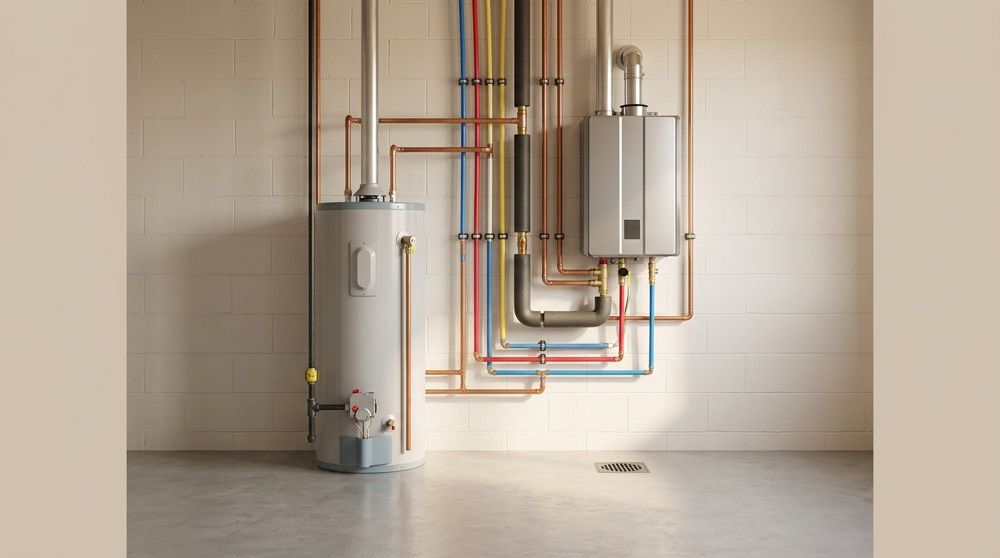
In a home that needs more than one treatment, the order of the equipment matters as much as the equipment itself. Sediment filtration typically comes first, followed by any iron or sulfur treatment, then carbon, with a softener and UV positioned according to what the water needs.
Getting the sequence right protects the more expensive components. A sediment prefilter keeps grit out of carbon and softener resin. Iron removal ahead of a softener prevents the resin from fouling. A UV unit belongs after the particles are gone. All of it should include a bypass valve so the system can be serviced without cutting water to the house, and outdoor spigots are often left on unfiltered water so you are not paying to treat garden water.
This is where a buyer's guide meets the bigger picture. Our complete guide to better water quality for Ohio Valley homes walks through how hardness, chlorine, and well contaminants fit together, and filtration is one piece of that plan. Protecting the water heater is part of the payoff, too: less sediment reaching the tank means less buildup, a point our complete guide to home water heaters covers from the appliance side.
Maintenance Is Part of the Purchase
Every whole-house filter needs regular maintenance, and the cost of cartridges, media, or lamps belongs in your budget before you buy. A filter that is not maintained stops doing its job, and in some cases it can make water quality worse.
The CDC's filter guidance advises changing filters according to the manufacturer's recommendations, wearing gloves during changes, and washing your hands afterward. It also carries a caution that surprises many buyers: if you install a whole-home filter that removes chlorine or other disinfectants, more germs may grow in your plumbing. That is not a reason to avoid carbon filtration, but it is a reason to keep the system maintained and to flush lines that sit unused.
A useful habit is to note the date and the pressure reading each time a cartridge is changed. A steady drop in pressure between changes is the clearest sign a sediment cartridge is loading up. Backwashing systems need their control valve checked and their settings matched to your water, and UV lamps lose output over time even while they still glow.
What Should You Ask Before You Buy?
Ask what your water test showed, which contaminant each component targets, which certification covers it, and what annual maintenance will cost. A good installer can answer all four in plain language; a sales pitch usually cannot.
A few more questions separate a sound recommendation from an oversold one. Is the system sized to your peak flow and your main line? Does it need a drain for backwashing, and is there one nearby? Where will the bypass valve go? Which parts can you service yourself, and which need a technician? If you are on a well, has anyone tested for bacteria before recommending UV? And is a whole-house system even necessary, or would a targeted drinking-water filter solve the problem at a fraction of the cost?
That last question matters. Our water filtration and softening service is built on a Good, Better, Best approach, which means a point-of-use filter is on the table when the concern is limited to drinking water. You should never be talked into more equipment than your test results support.
Start With a Water Test
The best first step toward a whole-house filter is a water test, not a purchase. Every Joe's Better Plumbing visit includes a complimentary water-quality analysis, so the system we recommend is based on what is actually in your water.
We serve homeowners throughout the Steubenville and Weirton corridor. If you are in the city, see our page for a plumber in Steubenville, OH, or call Joe's Better Plumbing at 740-202-9920 any hour to reach a real person. You can also contact Joe's Better Plumbing to book a visit and see your options, with upfront pricing, before any work begins.
Frequently Asked Questions
How often do whole-house filter cartridges need to be changed?
It depends on the filter type and your water. Sediment cartridges on dirty or well water can load up within a few months, while large whole-house carbon tanks may run for years before the media needs replacing. Follow the manufacturer's schedule, and treat a noticeable drop in water pressure or a return of chlorine taste as a sign a change is due.
Will a whole-house water filter reduce my water pressure?
A correctly sized system should cause only a small pressure drop that most households never notice. Pressure problems usually come from an undersized housing, ports smaller than the main line, or a clogged cartridge. If pressure falls steadily between changes, the filter is loading up. A plumber can size the system to your home's peak flow so showers stay strong.
Does a whole-house filter remove lead?
Usually not. Many whole-house systems are not certified for lead, and lead often comes from solder, brass fixtures, and faucets inside the home, after water has passed a point-of-entry filter. The U.S. Environmental Protection Agency advises using a filter certified to remove lead, typically at the kitchen tap, if lead is a concern.
Is a whole-house filter worth it on city water?
It is worth it when the problem affects the whole house, such as chlorine odor in every shower, sediment after main breaks, or dry skin you link to treated water. If your only concern is the taste of drinking water, a kitchen filter is usually the smarter buy. A water test and your utility's annual report together show which situation you are in.
Anthony Joyce is a master plumber and the founder of Joe's Better Plumbing, serving homeowners across the Ohio Valley from Steubenville, Ohio. He built the company on a simple conviction — that plumbing done with craftsmanship and honesty means repairing what others would rip out. Anthony and his team bring master-plumber standards, upfront options, and a real person on the phone to every home they serve.
Recent Posts