Tankless Water Heaters: A Buyer's Guide for Ohio Valley Homes
August 8, 2026
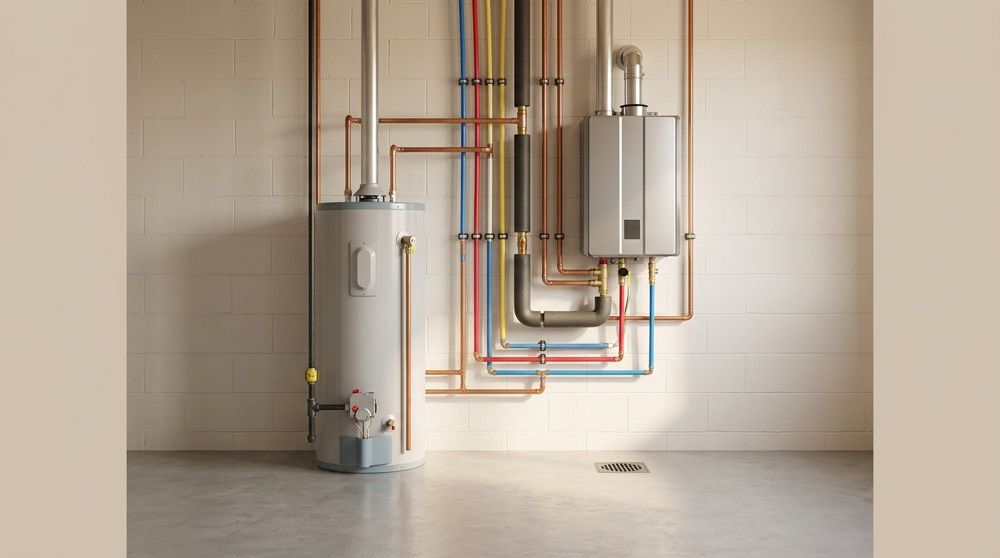
Tankless water heaters heat water on demand instead of storing it, which is why they can deliver near-endless hot water while taking up far less space than a tank. For **tankless water heaters Ohio Valley** homeowners are weighing, the real decision comes down to fuel type, household size, budget, and our region's hard water — because scale is the one thing that quietly shortens a tankless unit's life if it goes unaddressed.
If you have lived in the same house for a decade, you have probably replaced a water heater once already, and you remember the day the old tank let go. A tankless unit changes that story. Instead of a fifty-gallon barrel of hot water sitting in your basement day and night, you get a wall-mounted heat exchanger that fires only when someone opens a hot tap. That difference sounds simple, but it reshapes how much space you reclaim, how much energy you spend, and how you plan for the years ahead. This guide walks through how the technology works, what it costs, how it is sized, and the hard-water reality every Ohio Valley home has to plan around. We believe in showing you the whole picture before anyone talks about installing anything — that is how we would want it explained to us.
How Does a Tankless Water Heater Actually Work?
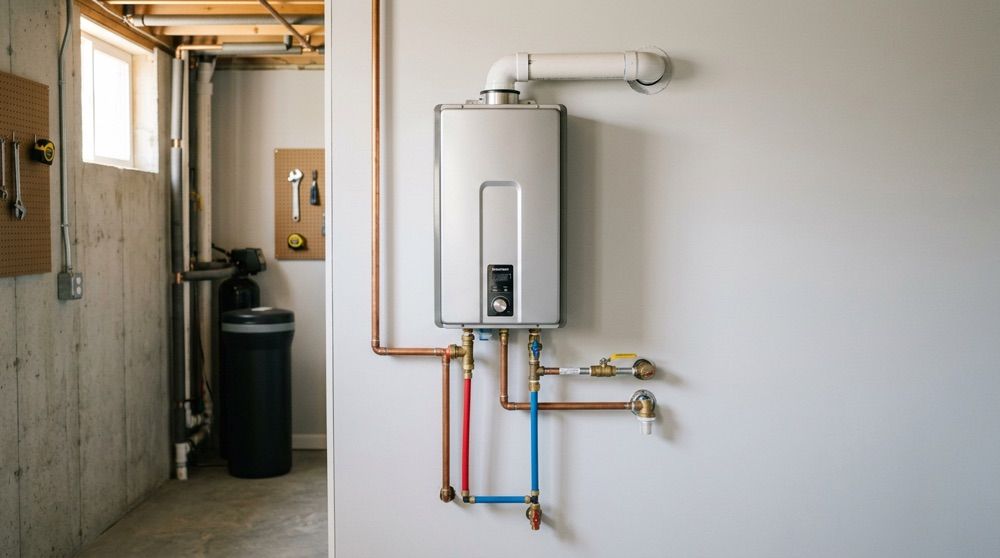
A tankless water heater heats water only when you ask for it. When you open a hot tap, cold water flows through the unit, a burner or electric element fires, and the water is heated as it passes through — no stored reservoir, no standby reheating, no tank to run out.
Inside the unit, a flow sensor notices water moving and switches on the heat source. Gas models ignite a burner beneath a heat exchanger; electric models energize heating elements. The water winds through that exchanger and comes out hot at the far end, usually within a couple of seconds. Because nothing is stored, the unit does not spend energy overnight keeping a tankful warm for a shower you have not taken yet. That is the core of the tankless vs tank comparison: a storage tank heats and reheats water around the clock, while a tankless unit heats only what you actually use.
The trade-off is flow. A tank hands you a big slug of pre-heated water all at once, then needs time to recover. A tankless unit gives you a steady, unlimited stream — the promise of endless hot water — but only up to its rated flow. Ask it for more hot water than it can heat at that moment, run the shower, dishwasher, and laundry together, and the temperature can dip. That is why sizing matters so much, and we will come back to it.
Gas or Electric — Which Tankless Fits Your Home?
For most Ohio Valley homes, a gas tankless heater delivers the higher flow rate a busy household needs, while an electric tankless can be the right, cleaner-install choice for smaller homes or point-of-use spots. The best answer depends on your existing fuel, your electrical service, and how much hot water you draw at once.
Gas tankless units — natural gas or propane — put out more heat per minute, so they can supply whole-house demand even in winter, when incoming river-valley groundwater is cold and the unit has to work harder to reach temperature. The catch is supply and venting. A gas tankless often needs a larger gas line than an old tank required, plus proper venting for combustion. If your home is not already set up for it, that work belongs to a licensed pro; upgrading or running the correct gas line for a tankless water heater is not a place to guess.
Electric tankless units install more simply — no combustion, no venting — but they draw serious amperage. A whole-house electric model can require a dedicated circuit or a service-panel upgrade many older Steubenville and Weirton homes do not have. They shine as point-of-use heaters for a single bathroom, an addition, or a garage. That is the heart of the gas vs electric tankless decision: gas usually wins on whole-house flow, electric wins on install simplicity and works well at a smaller scale. A master plumber will look at your fuel, your panel, and your demand before pointing you either way.
What Does a Tankless Water Heater Cost?
A tankless water heater generally costs more up front than a standard tank, both for the unit and the installation, but it can pay part of that back through lower energy use and a longer service life. The right way to read tankless cost is over the life of the system, not just the price on the box.
The equipment itself runs higher than a comparable tank, and installation is usually where the gap widens — a first-time tankless conversion can mean gas-line upsizing, new venting, or electrical work that a straight tank swap would never touch. Those are one-time costs tied to getting your home ready, not recurring ones. Against that, tankless units are more efficient and typically last longer, so the yearly operating cost and the replacement timeline both move in your favor.
According to the U.S. Department of Energy's Energy Saver guidance, for homes that use around 41 gallons of hot water or less per day, tankless water heaters can be 24 to 34 percent more energy efficient than conventional storage tank heaters, and demand units commonly last more than 20 years — well beyond the 10-to-15-year life of a typical tank. That efficiency edge narrows for very high-use households but rarely disappears. This is where the Repair, Rebuild, Replace way of thinking earns its keep: if your current heater can be safely repaired, we will tell you, and we will only steer you toward a tankless replacement when the numbers and your household actually call for it.
Is a Tankless Worth It for an Ohio Valley Home?
For many Ohio Valley homes a tankless water heater is worth it — especially where space is tight, hot-water demand is steady, and the family plans to stay put long enough to earn back the higher up-front cost. But it is not automatically the right call for every house, and hard water changes the math here more than almost anywhere.
Tankless makes the most sense when you value reclaimed basement space, want to stop paying to keep a tank warm around the clock, and expect to own the home long enough to benefit from the longer lifespan. It makes less sense if your demand regularly spikes past what one unit can flow, if a fuel or panel upgrade would balloon the install, or if you are moving in a year or two. Household size is the honest test: a small home with modest, staggered hot-water use is an easy yes; a large family running several fixtures at once may need a properly sized gas unit — or even two — to keep everyone happy.
Then there is our water. The Ohio Valley runs hard, and hard water is the quiet enemy of any heat exchanger. Which brings us to the part most sales pitches skip.
Hard Water, Scale, and Why Descaling Matters Here
Hard water shortens the life of a tankless water heater by leaving mineral scale on the heat exchanger, and in our region that is not a maybe — it is a when. Left alone, scale steals efficiency, weakens hot-water flow, and can cut years off the unit. Softening the water and descaling on a regular schedule is how you protect the investment.
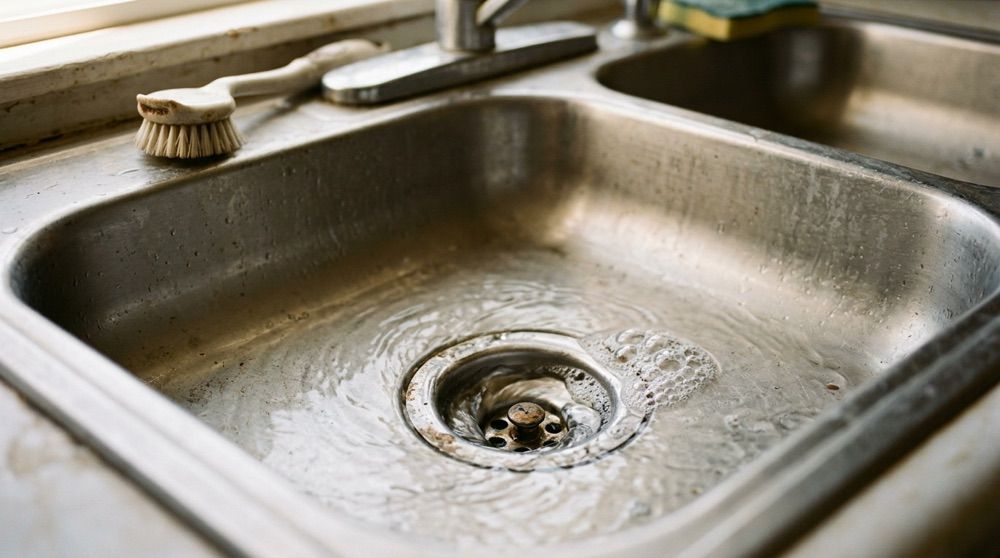
Here is the mechanism. As hard water is heated, dissolved calcium and magnesium drop out and crystallize onto hot metal surfaces. In a tank, that sludge settles at the bottom where you can flush it. In a tankless unit, it plates the narrow passages of the heat exchanger — exactly where the heat transfer happens. A thin scale layer forces the burner or elements to work harder, drops your flow rate, and can trip error codes long before the unit's rated end of life. Tankless hard water descaling is the routine flush that dissolves that buildup, and on Ohio Valley water most manufacturers want it done at least once a year to keep the warranty and the performance intact.
Consider a home in the Steubenville–Weirton corridor that installs a new gas tankless without addressing its hard water. Plausibly, and this is a hedged illustration rather than a guarantee, that unit could begin showing reduced flow and efficiency within just a few years — while an identical unit paired with a softener and annual descaling runs clean well past the two-decade mark the DOE cites. The fix is not exotic. A whole-home water softening system cuts the mineral load before it ever reaches the heater, and scheduled descaling handles whatever gets through. This is the "Better Water. Better Life." idea made practical: treat the water first, and the equipment downstream lasts the way it should.
How to Decide — and When to Call a Master Plumber
Decide by working through four things in order: household size and peak hot-water demand, available fuel and electrical capacity, up-front budget against long-term savings, and your plan for staying in the home. When those line up toward tankless, the sizing and installation are where a licensed master plumber earns their place.
Sizing is not guesswork. A pro adds up the fixtures you might run at once, factors in how cold the incoming water gets in a river-valley winter, and calculates the flow rate and temperature rise your unit must hit — the core of proper tankless sizing. Undersize it and you get lukewarm showers when the dishwasher runs; oversize it and you overpay. Getting it right means matching the unit to how your household actually lives.
Installation is the other half. Gas-line sizing, combustion venting, electrical loads, condensate handling, and code compliance all have to be correct, and on gas or high-amperage electric units this is genuinely safety-sensitive work. This is where we come in. A real person answers our phone any hour, your appointment is confirmed within one business hour, every plumber on our team is background-checked and drug-tested, and we show you the options before any work begins. Whether you land on a new tankless unit or a well-chosen water heater replacement of the conventional kind, we will size it, install it to code, and stand behind the craftsmanship.
Frequently Asked Questions
Do tankless water heaters work well with hard water?
They work well only if the hard water is managed. On untreated Ohio Valley water, scale builds up inside the heat exchanger, cutting efficiency and flow and shortening the unit's life. Pair a tankless heater with a water softener and flush it on the manufacturer's descaling schedule — usually at least once a year here — and it performs reliably for its full rated lifespan.
How long do tankless water heaters last?
Tankless water heaters commonly last more than 20 years, according to U.S. Department of Energy guidance — roughly double the 10-to-15-year life of a typical storage tank. That longevity assumes proper sizing, correct installation, and regular maintenance. In hard-water regions like the Ohio Valley, annual descaling and a water softener are what let a unit actually reach the two-decade mark rather than fall short of it.
Is a gas or electric tankless water heater better?
Neither is better outright — it depends on your home. Gas tankless units deliver higher flow and usually suit whole-house demand, but may need a larger gas line and venting. Electric units install more simply with no venting, but draw heavy amperage and often fit smaller homes or single points of use best. A master plumber weighs your fuel, panel, and demand to advise.
Are tankless water heaters worth it?
For many households, yes. Tankless heaters save space, use less energy, and last longer, so they can pay back a higher up-front cost over time — especially if you stay in the home for years. They are less compelling if demand regularly outstrips one unit's flow or if major fuel or electrical upgrades are required. Sizing and honest options make the difference.
Book a Plumber — a real person answers any hour, your appointment is confirmed within one business hour, and we show you the options before any work begins. Better Water. Better Life. Better Plumbers. Better Plumbing.
By Anthony Joyce, Master Plumber & Founder, Joe's Better Plumbing.
Anthony Joyce is a master plumber and the founder of Joe's Better Plumbing, serving homeowners across the Ohio Valley from Steubenville, Ohio. He built the company on a simple conviction — that plumbing done with craftsmanship and honesty means repairing what others would rip out. Anthony and his team bring master-plumber standards, upfront options, and a real person on the phone to every home they serve.